
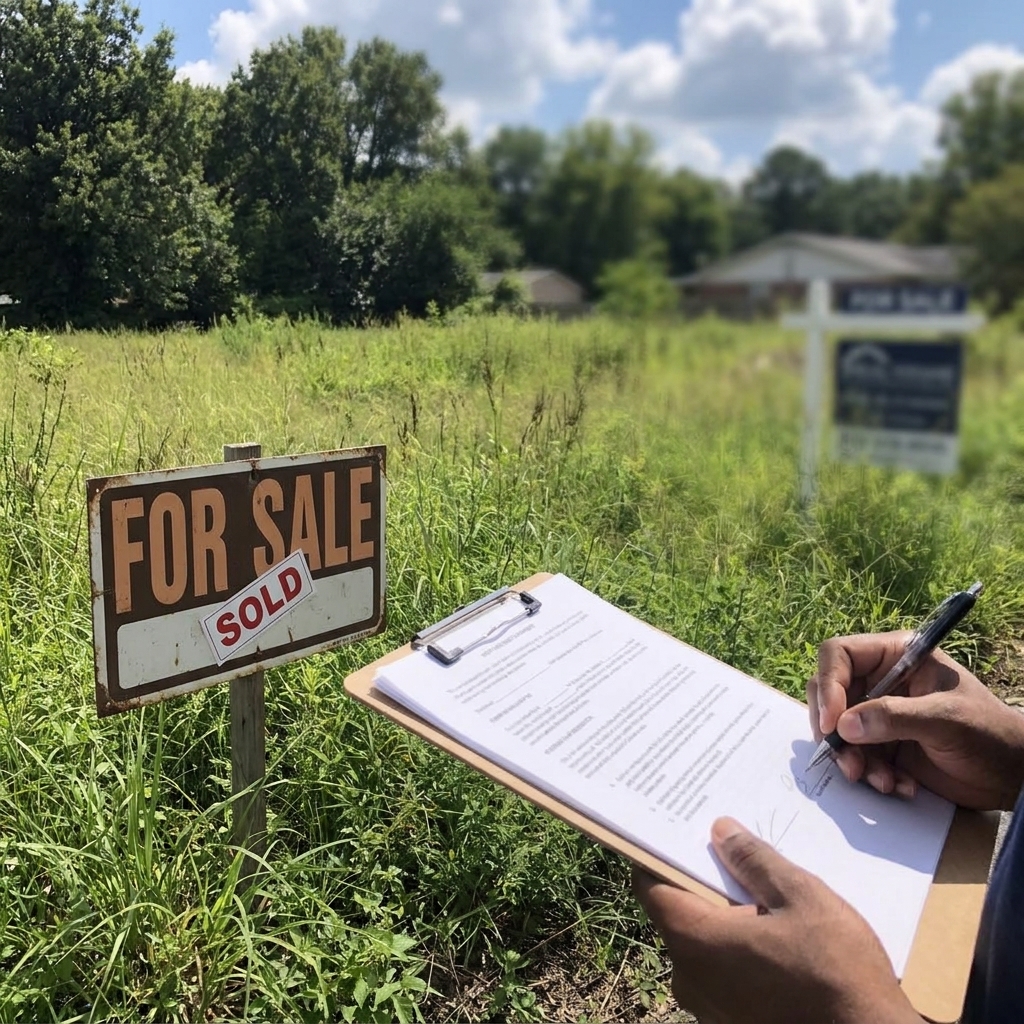
Selling inherited land in Atlanta means dealing with probate paperwork, unpaid property taxes, and sometimes co-heirs who disagree — and most people don't want to spend six figures fixing up a vacant lot they never asked for. This guide walks through the exact steps to sell inherited land for cash in Atlanta in 2026, from confirming legal authority to closing.
- Confirm executor or heir authority before you sign anything — this is the step that kills most deals late.
- A cash sale to a company like Atlanta Land Buyers closes in 7-14 days versus 6-12 months on the open market.
- Back taxes and liens get deducted at closing, not out of your pocket upfront.
- Georgia's stepped-up basis rule usually limits capital gains tax on inherited land sold near its date-of-death value.
Why this matters
Inherited land sits differently than a house you inherit. There's no agent lined up to list a vacant lot, no MLS traffic, and often no clear picture of what's owed on it. Fulton County alone carries thousands of tax-delinquent parcels, and a share of those are heirs who never resolved the estate before taxes stacked up.
The slower you move, the more penalties accrue and the more heirs can complicate a sale. Selling inherited land for cash in Atlanta bypasses the listing-repair-showing cycle entirely — Atlanta Land Buyers and similar direct buyers purchase the parcel as-is, liens and all, and handle the paperwork that would otherwise sit with a real estate attorney for months.
What you'll need
- Certified copy of the death certificate — required by the title company to confirm the estate
- Letters Testamentary or Letters of Administration from Fulton County Probate Court, proving you have authority to sell
- The deed (or a copy pulled from the Fulton County Clerk of Superior Court if you don't have the original)
- The parcel's tax ID / PIN from the county tax assessor's site
- A list of any known liens, mortgages, or unpaid tax bills on the parcel
- Contact info for any co-heirs who share ownership
- 30-60 minutes to gather documents; the sale itself takes 7-14 days once you have an offer
The steps
1. Confirm your legal authority to sell
You can't sell what you don't legally control yet. If the estate hasn't cleared probate, you need Letters Testamentary (if there's a will) or Letters of Administration (if there isn't) from Fulton County Probate Court before any sale closes.
Common mistake: heirs assume being named in a will is enough. It isn't — the court has to formally appoint you, and a buyer's title company will require that document before funding.
2. Pull the parcel's tax and title history
Search the parcel identification number on the Fulton County Board of Assessors site to confirm the assessed value, and check the Tax Commissioner's office for any delinquent balance. Inherited land frequently carries 2-3 years of unpaid taxes because nobody knew they were responsible for the bill.
This step tells you whether the land is heading toward a tax sale — Georgia counties can auction tax-delinquent parcels, and once that clock starts, your negotiating position weakens fast.
3. Decide between listing and a direct cash sale
A traditional listing means finding an agent willing to market raw land (many won't), waiting for a buyer who can get land financing (harder than home financing), and often waiting 6-12 months. A direct cash buyer skips financing contingencies entirely because they're not borrowing to close.
For land with back taxes, boundary questions, or multiple heirs, a cash sale usually closes faster because the buyer absorbs the cleanup work instead of asking you to fix it first.
4. Get a written cash offer
Request an offer based on the parcel's tax ID, acreage, and location rather than a drive-by guess. A legitimate offer should account for any liens or back taxes owed — those get deducted from your proceeds at closing rather than billed to you separately.
Common mistake: accepting a verbal number over the phone. Get the offer in writing with the deduction breakdown shown line by line.
5. Review the purchase agreement
Check that the agreement names every heir with an ownership interest — if one heir signs and others don't, the title company will flag it and the closing stalls. Confirm the closing date, the earnest money terms if any, and who's paying closing costs.
6. Clear title through a licensed closing attorney
Georgia land sales close through an attorney, not just a title company alone. The attorney runs a title search, resolves any judgment liens or old easements, and confirms the deed transfers clean. This is also where back taxes get paid off directly from sale proceeds.
7. Sign and close
Most direct cash sales in the Atlanta market close in 7-14 days once title is clear and all heirs have signed. You'll sign the deed, the attorney disburses funds (often by wire the same day), and the county records the new deed.
Common mistake: underestimating how long multi-heir signatures take if someone lives out of state — build in extra days for mailed or notarized remote signatures.
8. Handle the tax reporting
Inherited property usually gets a stepped-up basis to fair market value at the date of death, which means your capital gains exposure is often small if you sell close to that value. Talk to a CPA before filing — this guide isn't tax advice, and every estate's basis calculation differs.
Get a cash offer on inherited land
Atlanta Land Buyers closes in 7-14 days, no agents or repairs required.
Troubleshooting
- Multiple heirs disagree on selling — a buyout among heirs or a partition action in Fulton County Superior Court resolves it, but a partition suit can take a year or more. Try a written agreement among heirs first.
- Property is still in probate — the sale can't close until Letters Testamentary or Administration are issued. Ask the probate attorney for an expected timeline; Fulton County probate typically moves faster for smaller estates without disputes.
- Land has back taxes near a tax sale date — move fast. Once Fulton County schedules a tax sale, you lose control of the timeline and the parcel can be sold at auction for the tax debt alone.
- Deed has an old lien or judgment attached — a title search during step 6 catches this. The closing attorney negotiates payoff from proceeds; it rarely kills the deal, just adds a few days.
- Parcel is landlocked or has no recorded access easement — this lowers value but doesn't block a sale. Cash buyers who purchase raw land regularly account for access issues in the offer.
- Out-of-state heir can't attend closing — remote online notarization or a mailed, notarized deed handles this in Georgia without delaying the close by more than a few days.
Tools and resources
- Fulton County Board of Assessors — parcel value and tax ID lookup
- Fulton County Probate Court — Letters Testamentary / Administration filings
- Fulton County Clerk of Superior Court — deed and lien history
- A Georgia-licensed real estate closing attorney — required for the deed transfer
- Atlanta Land Buyers — direct cash offers on vacant lots, acreage, and inherited parcels in Fulton County
What to do next
Once you've confirmed your legal authority and pulled the tax history, the fastest next move is getting a written cash number to compare against a listing estimate. Run both numbers side by side, factor in the 6-12 month listing timeline against a 7-14 day cash close, and decide based on what the estate actually needs — speed, certainty, or maximum price over time.
FAQ
Can I sell inherited land before probate closes in Georgia?
No, you need Letters Testamentary or Letters of Administration from the probate court before you can legally transfer the deed. A closing attorney or title company will require this document before funding any sale.
How fast can you sell inherited land for cash in Atlanta?
A direct cash sale typically closes in 7-14 days once title is clear and all heirs have signed, compared to 6-12 months for a traditional land listing in 2026.
Do I have to pay off back taxes before selling inherited land?
No — back taxes and liens are usually deducted from your proceeds at closing rather than paid out of pocket beforehand. Get the deduction breakdown in writing before you sign.
What if multiple heirs inherited the same parcel?
Every heir with an ownership interest must sign the purchase agreement, or the title company will flag the deal. A written buyout agreement among heirs resolves most disputes faster than a court partition action.
Is selling inherited land for cash taxable?
Inherited land usually gets a stepped-up basis to its fair market value at the date of death, which limits capital gains if you sell close to that value. Confirm the exact basis with a CPA before filing.
What happens if the land has an unrecorded access easement?
A landlocked parcel or one without a recorded easement still sells, but it usually lowers the offer. Cash buyers who purchase raw land regularly factor access issues into the price rather than rejecting the parcel.
Do I need a real estate agent to sell inherited land in Atlanta?
No. Many agents avoid raw land listings because financing and buyer pools are thinner than for houses, and a direct cash sale skips the agent commission and listing timeline entirely.
What documents does a title company need for an inherited land sale?
A certified death certificate, Letters Testamentary or Administration, the deed or a clerk's office copy, and the parcel's tax ID number. Missing any of these delays the closing date.
One last thing
The detail most heirs miss: Fulton County doesn't wait patiently on unpaid taxes tied to an estate. Interest and penalties accrue from the original due date regardless of whether probate has closed, so the parcel you inherited debt-free on paper can carry a real balance by the time you're ready to sell. Check the tax assessor's site before you do anything else — it's the fastest way to know whether you're negotiating from strength or against a clock.